
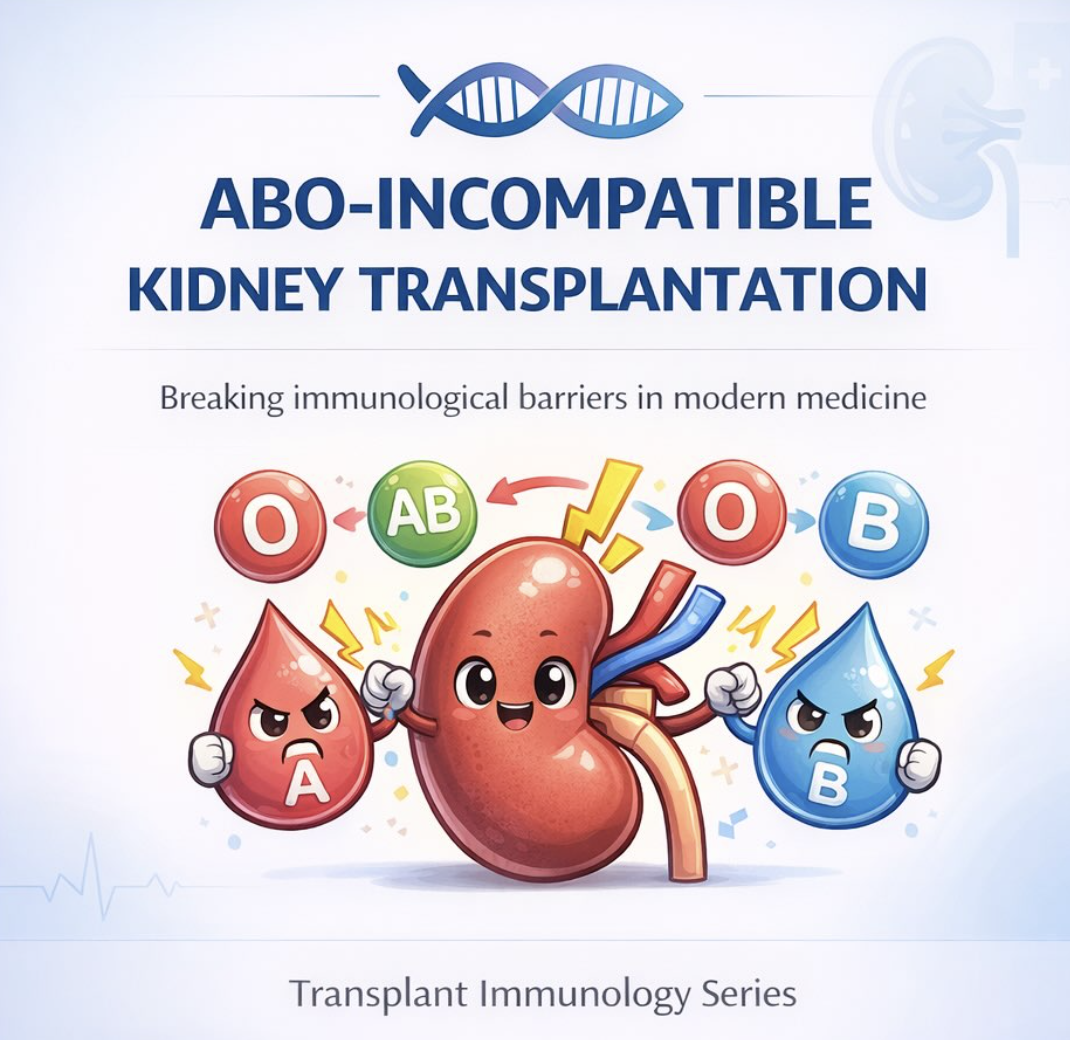
Kidney Transplantation Across Blood Groups: ABO-Incompatible (ABOi) Kidney Transplant Emerging as a Lifesaving Frontier
ABO-incompatible (ABOi) kidney transplantation is rapidly redefining the landscape of modern transplant medicine, offering renewed hope to thousands of patients suffering from end-stage kidney disease (ESKD) who previously faced limited opportunities for transplantation due to blood group incompatibility.
Historically, transplantation across incompatible blood groups was considered medically unsafe because naturally occurring anti-A and anti-B antibodies in recipients could trigger hyperacute rejection and immediate graft loss. However, remarkable advances in immunology, desensitization therapies, and post-transplant management have transformed ABOi kidney transplantation from a high-risk experimental approach into an increasingly accepted and successful clinical practice worldwide.
Expanding the Donor Pool Amid a Global Organ Shortage
The global burden of chronic kidney disease continues to rise at an alarming pace, while the shortage of compatible organ donors remains a major healthcare challenge. Long waiting periods for kidney transplantation often force patients to remain on dialysis for years, significantly increasing cardiovascular complications, morbidity, mortality, and healthcare costs.
ABOi kidney transplantation has emerged as a critical solution to bridge this gap by expanding donor availability beyond conventional blood group compatibility. This innovation enables transplantation between spouses, family members, and living donors who would otherwise be considered incompatible.
Leading transplant centers across Asia, Europe, and North America are now reporting outcomes comparable to ABO-compatible kidney transplantation when performed using modern desensitization protocols and careful immunological monitoring.
Advances in Desensitization Therapy
The success of ABOi transplantation is primarily attributed to advances in pre-transplant desensitization techniques designed to reduce circulating anti-blood group antibodies and minimize the risk of antibody-mediated rejection (AMR).
Current protocols commonly include:
- Therapeutic plasmapheresis or immunoadsorption
- Rituximab-based B-cell depletion therapy
- Intravenous immunoglobulin (IVIG)
- Potent maintenance immunosuppressive regimens including tacrolimus, mycophenolate mofetil, and corticosteroids
Rituximab has significantly replaced older invasive procedures such as splenectomy, improving patient safety while maintaining excellent graft outcomes. Innovations in immunoadsorption technology and antibody monitoring have also reduced treatment-related complications and hospital stays.
Clinical Outcomes Approaching ABO-Compatible Transplants
Recent clinical studies have demonstrated encouraging long-term graft and patient survival rates in ABOi kidney transplantation. Improved understanding of immunological accommodation — a phenomenon in which the transplanted kidney develops resistance to circulating antibodies over time — has contributed significantly to the success of these procedures.
Several high-volume transplant programs have reported:
- Reduced rates of acute antibody-mediated rejection
- Improved five-year graft survival
- Lower infection-related complications
- Better perioperative management outcomes
Furthermore, personalized antibody titer monitoring and emerging machine-learning models are helping clinicians better predict immunological risk and tailor treatment protocols for individual patients.
Persistent Challenges and Emerging Innovations
Despite significant progress, ABOi kidney transplantation continues to present complex immunological challenges. Patients with high baseline antibody titers remain at increased risk of rejection, infections, bleeding complications, and delayed graft function.
To address these concerns, researchers are exploring novel targeted therapies, including:
- Complement inhibitors such as eculizumab
- Plasma cell-targeted therapies
- IL-6 pathway inhibitors
- IgG-cleaving enzymes such as imlifidase
These next-generation therapies may further reduce rejection rates and improve long-term graft survival in highly sensitized recipients.
A Transformative Shift in Transplant Medicine
ABOi kidney transplantation represents one of the most important breakthroughs in contemporary nephrology and transplant surgery. What was once considered impossible is now offering a second chance at life to patients who previously had limited treatment options.
For healthcare systems struggling with widening organ demand and donor scarcity, ABOi transplantation is not only expanding access to transplantation but also reducing dialysis dependence and improving long-term quality of life.
As immunological science, precision medicine, and transplant technologies continue to evolve, ABO-incompatible kidney transplantation is expected to become an increasingly integral component of global renal transplant programs.
The future of kidney transplantation is no longer defined solely by blood group compatibility, but by the ability of modern medicine to overcome immunological barriers and deliver lifesaving solutions to patients worldwide.
- By Dr. Rajendra Sen